

Thousands of Amazon sellers end the month with healthy ACoS numbers and shrinking bank balances, and most of them never figure out why. Amazon FBA PPC cost is not a single line item. It is a layered stack of referral fees, fulfillment fees, storage allocations, return penalties, and ad spend that all hit the same unit before any profit is recognized. When sellers measure only ACoS, they are reading one chapter of a book and calling it the whole story.
According to Statista, a quarter of Amazon SMB sellers operate at 5% profit margin or less, a number that reflects what happens when ad spend and fees go untracked at the unit level.
The sellers who consistently grow margins are the ones who operate on full unit economics, not campaign metrics. That shift in thinking is exactly what Xneeti's AI platform is built around: tracking every cost layer across an entire catalog, continuously, at the SKU level, so that no fee goes unaccounted and no ASIN is scaled at a loss. In this blog, we break down the complete formula for true cost per sale on Amazon, component by component, with worked examples across price tiers.
Why Is ACoS Giving You a False Sense of Profitability?
ACoS only tracks what your ads spent against what they earned. Every other cost, such as fulfillment, referral fees, returns, and sourcing, sits completely outside that number.
ACoS measures one thing: what percentage of ad-attributed revenue went toward ad spend. That is it. It does not account for FBA fulfillment fees, referral fees, storage costs, returns, or what the product actually costs to source. A campaign can run at a textbook ACoS and still be losing money on every single sale, because the fees sitting outside Campaign Manager are never part of that calculation.
Take a $30 product with a 25% ACoS. That reads as $7.50 in ad spend per sale, seemingly under control. But add a $6.50 FBA fee, a $4.50 referral fee, a $8.50 COGS, and a 12% return rate carrying its own fee penalty, and the net margin is gone before storage is even factored in. The number that looked profitable was never measuring Amazon FBA and PPC costs combined, it was measuring one cost in isolation.
This is the core distinction every scaling seller needs to make: ACoS is a campaign metric. It tells you how efficiently your ads are converting clicks into attributed revenue. Amazon FBA PPC cost, the true, all-in cost per sale, is a business metric. It tells you whether that sale was worth making at all.
What Is the True Cost Per Sale Formula for Amazon FBA Sellers?
Here is the formula that actually tells you whether a sale made money:
Net Profit = Selling Price – (Referral Fee – FBA Fulfillment Fee – Storage Allocation – PPC Cost Per Sale – COGS – Returns Cost)
That is your Amazon cost per sale calculation, every variable that touches a unit from the moment it enters a fulfillment center to the moment revenue is recognized. If any one of these is missing from your model, your margin number is wrong.
Here is what each component represents:
- Selling Price: The price the customer pays, including any promotional discounts you are running.
- Referral Fee: Amazon's cut of every sale, typically 8–15% depending on category, charged on the full selling price.
- FBA Fulfillment Fee: Picking, packing, and shipping, determined by the product's size tier and weight.
- Storage Allocation: Monthly storage fee divided by units sold that month for that ASIN, a per-unit cost most sellers never calculate.
- PPC Cost Per Sale: Not ACoS percentage, but actual ad spend divided by units sold through ads (covered in detail in its own section).
- COGS: Cost of goods, including inbound shipping to Amazon's fulfilment centres.
- Returns Cost: The fee Amazon retains on returned units, which does not reverse when a sale does.
Once this formula is running per ASIN, break-even ACoS becomes a derived output, not a target you set manually. Break-even ACoS equals your gross margin percentage before ad spend. Any ACoS above that number means every ad-attributed sale is generating a loss, regardless of revenue volume.
How Do FBA Fulfillment Fees and Referral Fees Affect Your Margin?
These two fees alone consume 25–40% of your selling price before your COGS or ad spend enters the picture. For most sellers, they are the highest fixed cost per unit, and the ones most likely to be underestimated at the sourcing stage.
FBA Fulfillment Fees — 2026 Rates by Size Tier
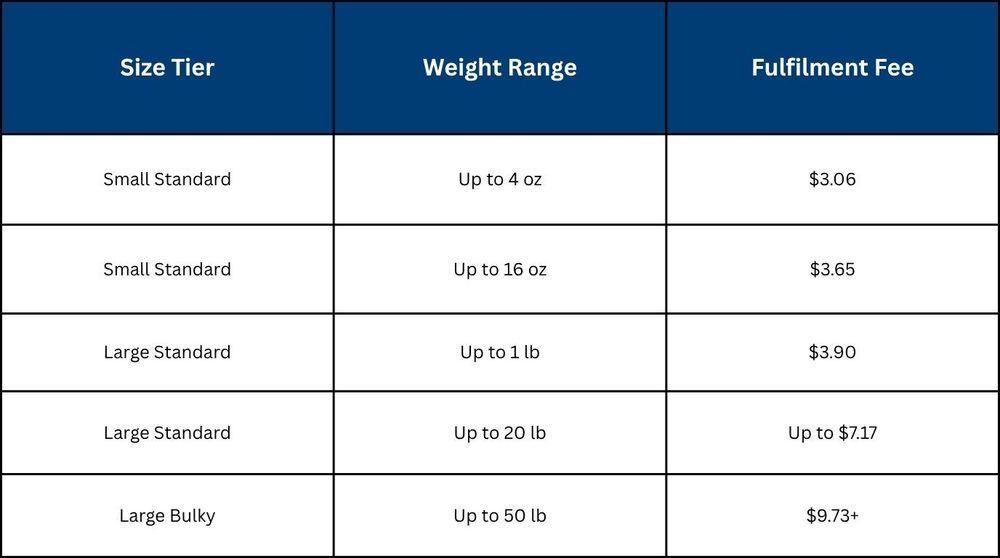
Peak season surcharges apply from October through December, adding $0.19 to $1.73 per unit depending on size tier. For sellers running high volumes in Q4, this surcharge alone can meaningfully compress Amazon FBA true profit margin if it has not been built into the cost model ahead of the season.
According to Amazon's 2026 FBA fee update, fulfillment fees increased by an average of $0.08 per unit effective January 15, 2026, a number that sounds small but compounds fast across high-volume catalogs.
One number worth paying close attention to: a product sitting at 16 oz stays in Small Standard at $3.65. At 17 oz, it crosses into Large Standard, and the fee jumps by $0.25 or more per unit. At 10,000 units a month, that is $2,500 in avoidable fees, from one ounce of packaging.
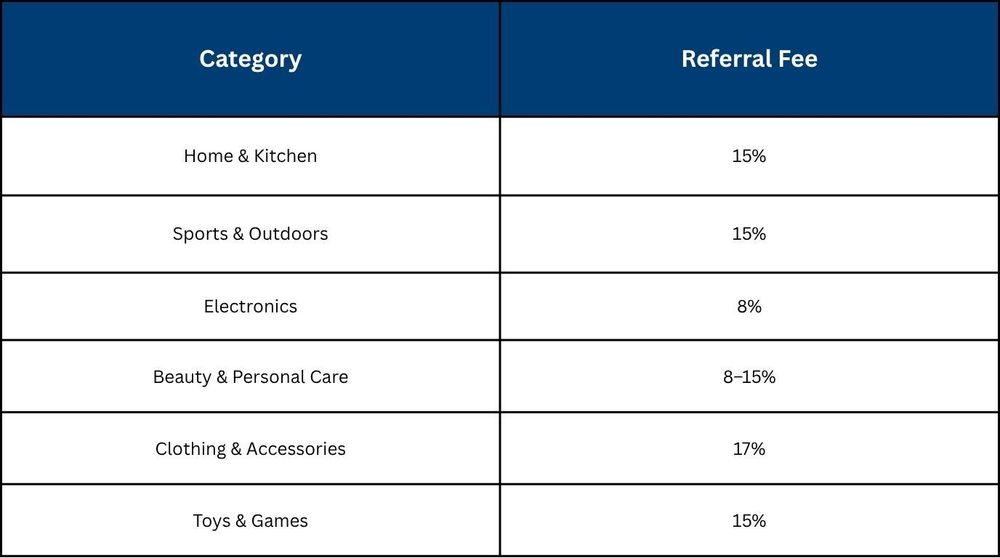
The referral fee is calculated on the total selling price, including any shipping charges collected, with a minimum of $0.30 per unit, regardless of sale price. For low-price products, that minimum kicks in and disproportionately impacts margin. A $4.99 product paying $0.30 in referral fees is already at a 6% referral rate before the selling price is even high enough to trigger the standard percentage.
What Is Your Real PPC Cost Per Sale and How Is It Different From ACoS?
Most sellers watch ACoS and assume it reflects what their ads are actually costing them per sale. It does not. Your real Amazon FBA PPC cost per sale comes down to one calculation:
PPC Cost Per Sale = CPC ÷ Conversion Rate
At a $1.20 CPC, a listing converting at 5% costs $24 in ads per sale. The same bid on a listing converting at 15% costs $8. Same keyword, same spend, but the margin impact is completely different. This is why listing quality is not just a content decision. It is a direct cost lever on your unit economics.
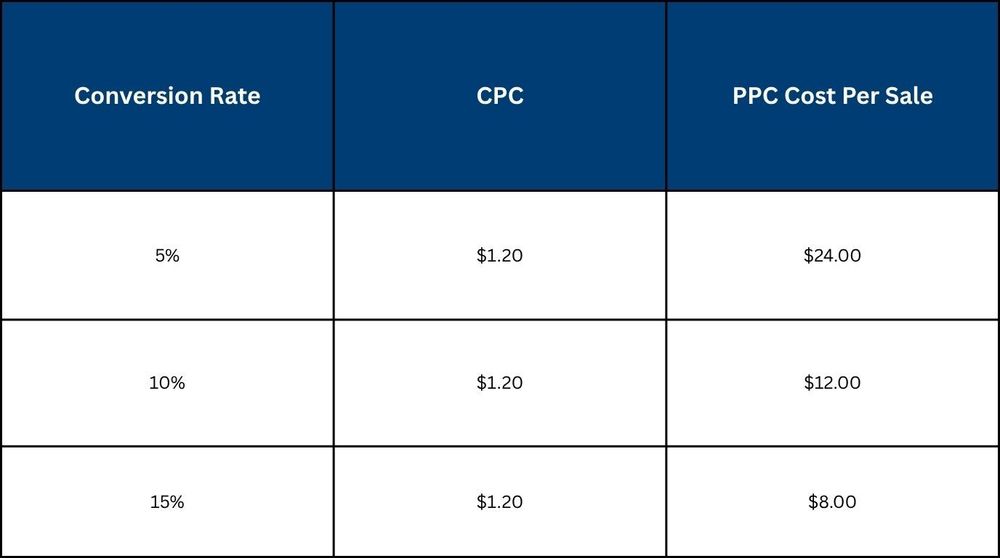
Amazon defines cost-per-click as the average amount paid per ad click, total spend divided by total clicks. But that number alone tells you nothing about profitability. What matters is how many of those clicks turned into sales, and what each of those sales actually cost you.
This is also where Amazon PPC break-even ACoS starts to show its limits. Two sellers can run the same ACoS and carry completely different ad costs per unit, purely based on how well their listing converts. A percentage metric cannot capture that gap. A per-unit cost model can.
How Much Are Returns Actually Costing You Per Unit?
When a customer returns a product, the sale reverses. The fees do not. Amazon retains the full FBA fulfillment fee and 20% of the referral fee on every returned unit, and that cost sits outside most sellers' profitability models entirely.
At a 10% return rate on a standard-size product, that translates to $4–$6 in unrecovered fees per unit sold across your catalog. Not per returned unit. Per unit sold. It is a cost that spreads across every sale, whether returned or not, and it compounds fast at volume.
Here is what the fee structure looks like on a return:
- FBA fulfillment fee: Fully retained by Amazon, not refunded, regardless of return reason
- Referral fee: 20% kept by Amazon as a refund administration fee, 80% returned to the seller
- The sale revenue: Reversed in full to the customer
- COGS: Already spent, not recoverable if the unit is returned unsellable
Return rates vary significantly by category, and if yours is high, this cost layer is not small:
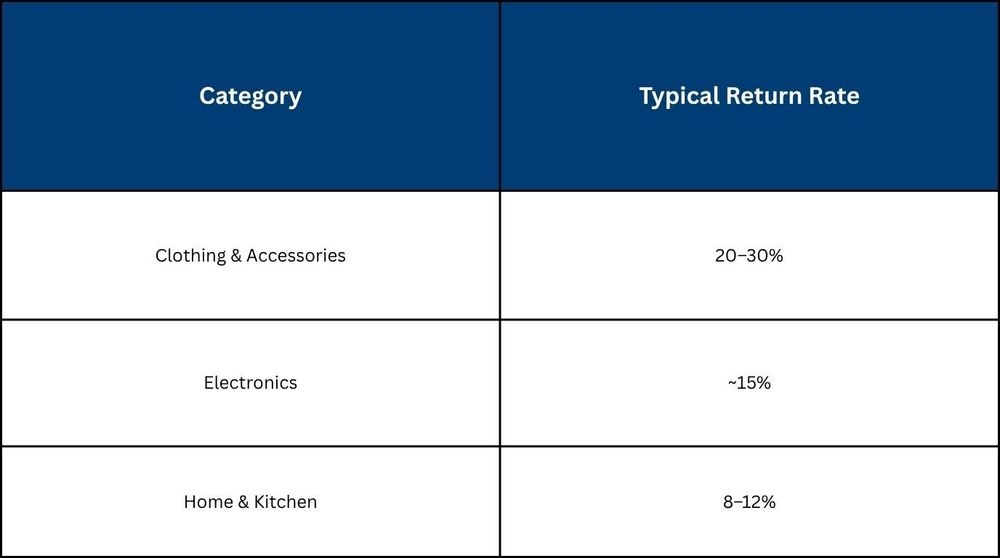
Most cost models treat returns as an edge case. For any seller in a high-return category, they are a fixed cost of doing business, and one that belongs in the true cost per sale on Amazon calculation from day one. The ASIN that looks profitable on paper may only look that way because returns are sitting off the books.
When you factor Amazon FBA and PPC costs combined with a realistic return rate per category, the margin picture often looks materially different from what Campaign Manager is showing.
Are Storage Fees and Inbound Placement Costs in Your Model?
For most sellers, the honest answer is no, and that means their Amazon unit economics are built on an incomplete cost stack.
Two fees consistently get left out: monthly storage allocation per ASIN and the inbound placement fee. Both are real, recurring costs. Neither shows up in Campaign Manager or your basic P&L unless you have deliberately built them in.
Here is what each one looks like:
- Monthly storage — off-peak (Jan–Sep): ~$0.87 per cubic foot for standard-size products
- Monthly storage — peak season (Oct–Dec): ~$2.40 per cubic foot, nearly three times the off-peak rate
- Aged inventory surcharge: kicks in at 181+ days at $6.90 per cubic foot or $0.15 per unit, whichever is greater, for slow-moving SKUs, this escalates fast
The way to bring storage into your cost-per-sale model is straightforward: take the total monthly storage fee for an ASIN and divide it by the units sold that month. That gives you a per-unit storage cost that slots directly into the formula alongside your FBA fee and referral fee.
A product that turns quickly will carry a small storage cost per unit. A slow-moving SKU sitting in a fulfillment center through Q4 can easily accumulate $1–$3 in storage cost per unit sold on top of the aged inventory surcharge if it crosses the 181-day mark.
Amazon FBA profit after fees and PPC cannot be accurately calculated without these two numbers. If your cost model predates 2024, it is missing at least one of them.
What Does the True Cost Per Sale Look Like at $19.99, $34.99, and $64.99?
The formula applies at every price point. What changes is how much it leaves behind. Amazon FBA true profit margin does not scale in a straight line with selling price, fees, referral percentages, and PPC spend all compress it differently depending on which tier your product sits in.
Here is the same Home & Kitchen product, small-to-large standard-size, worked across three price points with all costs included. FBA fulfillment fees reflect 2026 rates, including the 3.5% fuel and logistics surcharge effective April 17, 2026.
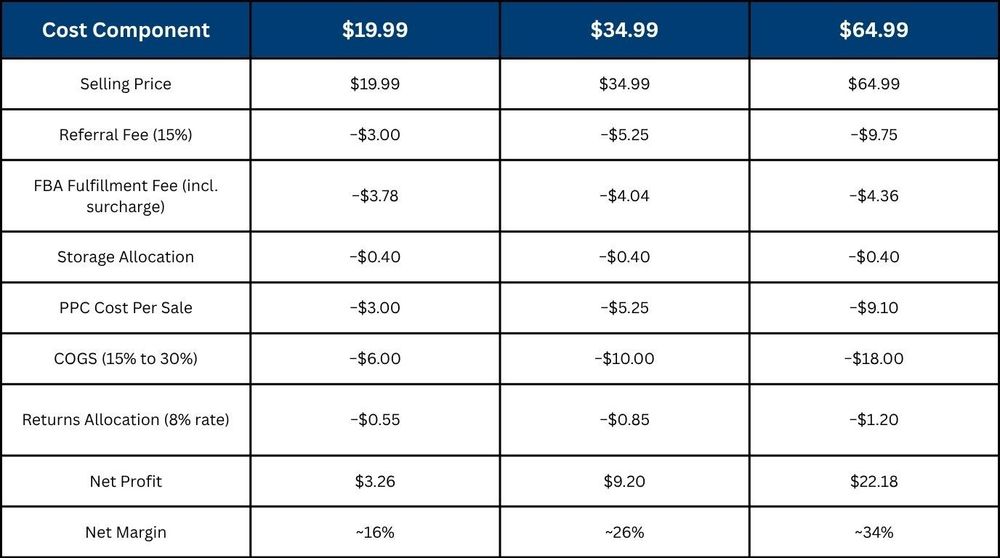
At $19.99, fees and COGS consume over 80% of revenue even before factoring in a single return. A modest increase in PPC spend or one bad return month can wipe out the remaining margin entirely.
At $64.99, the percentage margin looks healthier, but the dollar impact of each returned unit is significantly higher. Any category with a return rate above 10% will feel this pressure far more than the margin percentage suggests. Even with a higher COGS of 25–30%, the unit economics remain sensitive to returns and ad spend variability.
How Do You Calculate the Maximum CPC You Can Afford Per ASIN?
Every ASIN has a hard ceiling on what it can afford to pay per click. Bid above it, and every ad-attributed sale generates a loss, regardless of what ACoS reads in Campaign Manager. Here is the formula that sets that ceiling:
Max CPC = Selling Price × Break-even ACoS × Conversion Rate
Break-even ACoS is not a target you choose, it is your gross margin percentage before ad spend. Amazon's own ACoS guide defines it clearly: to stay profitable, your ACoS must remain below your profit margin. Cross that line, and ad spend is consuming more than the product actually earns. The Max CPC formula takes that margin boundary and converts it into a hard per-click dollar limit, specific to each ASIN, not a category-wide average.
Here is what that ceiling looks like across four price points at two margin scenarios, assuming a 10% conversion rate:
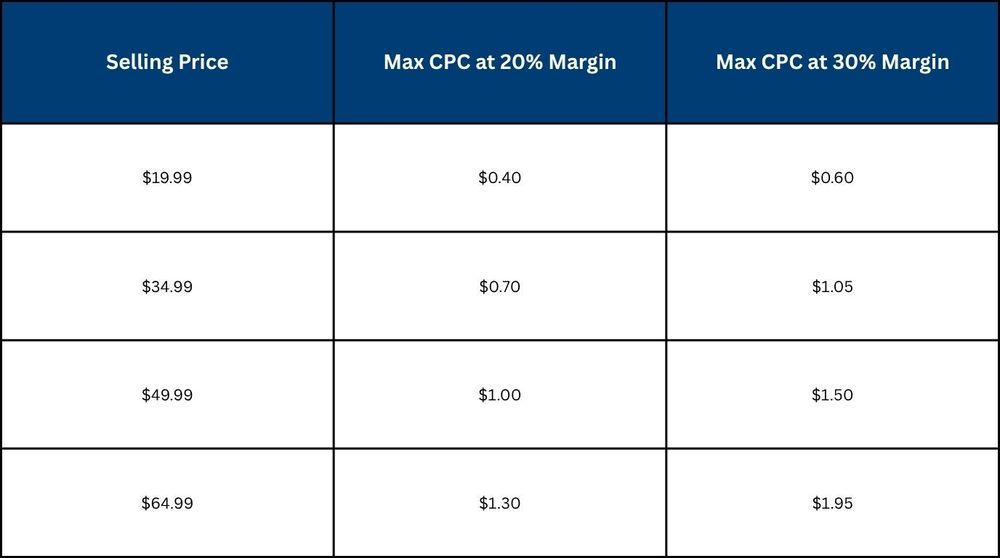
The pattern is immediate: margin percentage matters more than price point when it comes to how much you can actually afford to bid. A $19.99 product at 30% gross margin supports a higher Max CPC than a $34.99 product at 20%. Sellers who chase volume at a thin margin and a high bid are running an ad account that looks active but loses money on every attributed sale.
How Does Xneeti Track True Amazon FBA PPC Cost Across an Entire Catalog?
At 10 or more ASINs, manually maintaining a cost-per-sale model per SKU stops being a workflow issue and becomes a structural one, fee updates get missed, return allocations go stale, and bid decisions quietly revert to whatever ACoS reads that week. Xneeti's multi-marketplace AI platform was built specifically to solve this, running every cost layer across your entire catalog continuously, at the SKU level, so that no number goes untracked and no margin gets silently eroded.
What Xneeti's AI Does Differently
Xneeti is not a dashboard that waits for someone to act on it. Its AI adjusts bids by hour and placement, catches n-gram bleed early, flags storage thresholds, and integrates return rates into per-ASIN profitability signals, automatically.
The Human Strategy Layer
Every client gets one dedicated account strategist who owns campaign direction, profitability reviews, and direct communication. Xneeti runs at half the account-to-manager ratio that the industry standard is, so your account always gets real attention.
Results Xneeti Clients See
Clients average a 50% reduction in TACoS and 30% revenue growth, not from cutting spend, but from running every dollar against a real Amazon FBA PPC profitability model. That is the difference between optimizing a metric and managing a margin.
Why This Beats the Traditional Agency Model
Traditional agencies report on what already happened by the time you see it, the margin has moved. Xneeti's Amazon FBA PPC cost engine acts in real time, making cost-aware decisions on every ASIN before damage shows up in a monthly report.
Stop optimizing ACoS. Start measuring what actually drives profit.
ACoS was never the problem. The problem was treating it as the answer. Every fee, every return, every storage charge, and every PPC dollar adds up to one number that actually matters, the true cost per sale on Amazon. That is the only figure that tells you whether your catalog is building a business or quietly funding Amazon's growth instead of your own.
Xneeti models every one of those costs across your entire catalog, continuously, at the SKU level. Its AI adjusts your Amazon FBA PPC cost daily, and your dedicated strategist owns the full picture. If you are ready to move from ACoS to actual profitability, book a demo with Xneeti.


